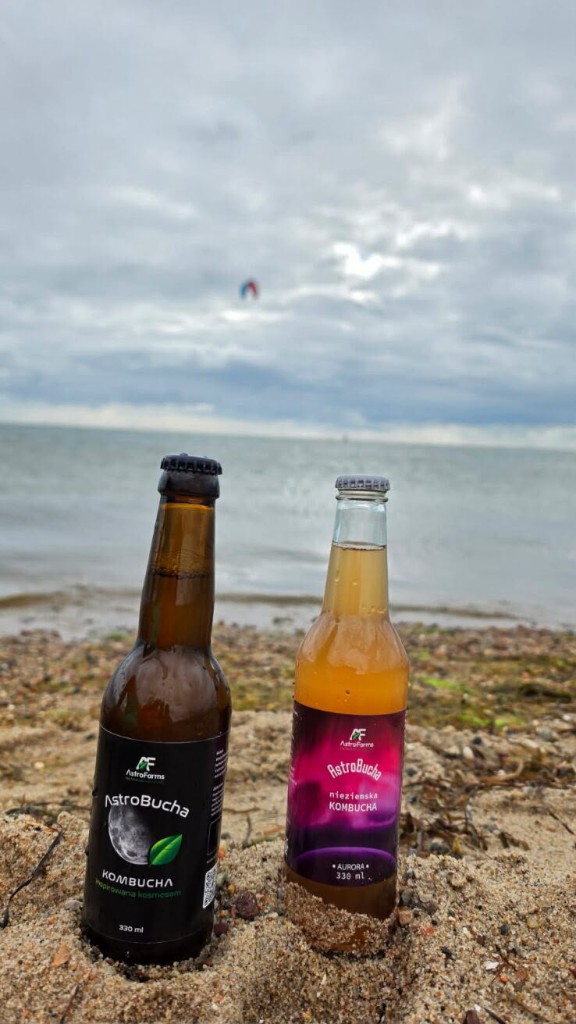
A scientific company that characterizes fermentation and studies how it behaves in space conditions.
We start with kombucha, but we don't stop there.
rocket_launchMission
We want to understand and control what is produced in the kombucha fermentation process, and use it to create a new generation of functional drinks and foods — on Earth and, in time, beyond it.
How AstroFarms was born
It started with a jar of kombucha in Japan.
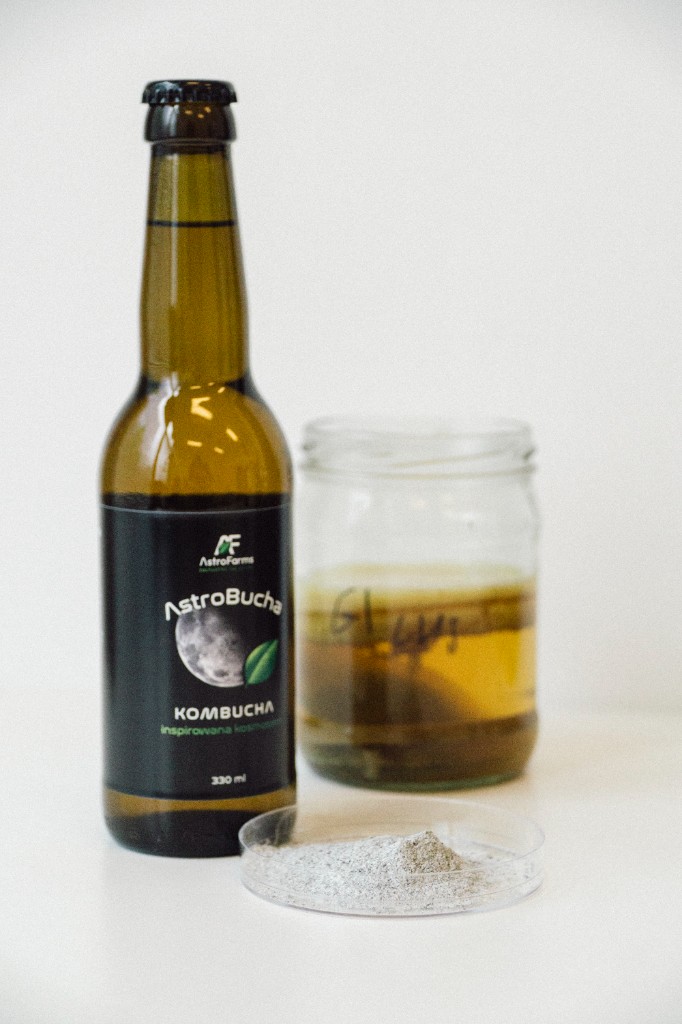
Dr Łukasz Szydłowski was in the middle of a postdoctoral fellowship when he first encountered SCOBY – a strange, rubbery culture of bacteria and yeast that has been brewing kombucha for centuries, passed from jar to jar. Most people see a drink. Łukasz, a microbiologist, saw a living chemical factory that we are only beginning to understand.
Years later, at NASA Jet Propulsion Laboratory, he met Adriana Błachowicz, a researcher of how microbes survive the extreme conditions of space. Two things came out of that conversation: Adriana herself was a quiet kombucha enthusiast, and they were both asking the same question – what else can this ancient culture do?
In 2024 they founded AstroFarms to find out.
We brew AstroBucha from our own SCOBY culture, which in November 2025 flew on a Perun rocket into the stratosphere and returned to Earth. This bottle is a beginning, not a finish line. We study how compounds produced by SCOBY can become a new generation of functional food, and how fermentation can support crops in Earth's most difficult soils – and one day, in soils that do not exist on Earth at all.
Ancient culture. New frontier.
AstroFarms. Cultivating the Future.
Our flights
The SCOBY culture we brew AstroBucha from has been to the stratosphere. That is only the first of the flights we have planned.
- rocket_launch
November 2025 — Perun, suborbital flight, 50 km
The SCOBY culture was exposed to radiation and to pressure and temperature changes that are not easy to recreate in the lab. After return, we compared the flight samples with the controls using multi-omic methods.
- trending_up
Next flights — higher
We repeat the experiment at greater altitudes to see how stronger exposure affects the culture.
- public
Orbit — longer exposure
Ultimately the culture will spend several dozen days in low Earth orbit, making it possible to observe changes spread over time, not just the effect of a short flight.
Where we are heading
Today
A drink
AstroBucha on the market: natural, low-sugar, with a known composition.
Tomorrow
A platform
Further drinks created through fermentation control: isotonic drinks, alcohol alternatives, and an energy drink based on natural caffeine and a natural composition.
In the longer term
A new frontier
Bioactive compounds for food and cosmetics, and research into fermentation and crops for long space missions.
Team

Dr Adriana Błachowicz
CEO, co-founder
Formerly NASA JPL. Space biology and planetary protection. Strategy, partnerships, funding.
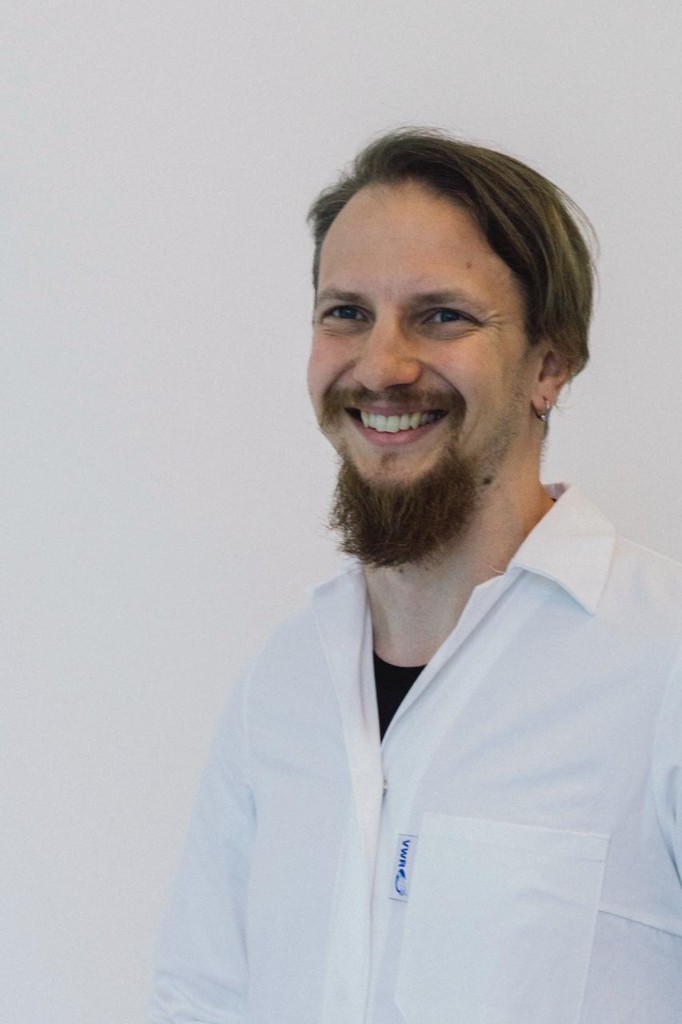
Dr Łukasz Szydłowski
CTO, co-founder
PhD, University of Cambridge. Characterized microbes from the ISS. Metagenomics and bioinformatics. Responsible for science and product development.
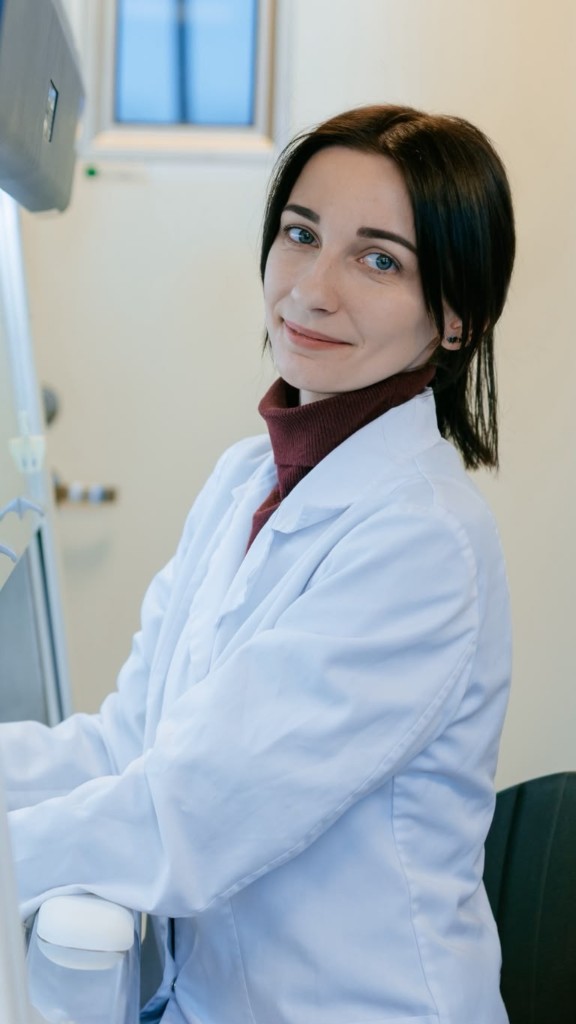
Oliwia Śmieszek
Collaboration - science communication
Microbiologist, supports communication and outreach.
school Our advisors

Dr. Rodrigo Ledesma-Amaro
Imperial College London
A leader in metabolic engineering of yeast and microorganisms.

Prof. Ioannis Ieropoulos
University of Southampton
An expert in microbial fuel cells and energy recovery.
Our partners



Want to join this journey?
We're looking for partners, retail points and people who want to build the future of functional drinks with us.
Write to us